
Ice Fishing Without Float Technology: Why It’s a Gamble You Can’t Afford
Ice fishing without float technology is a gamble: if you go through, a waterlogged traditional suit pulls you down while cold shock takes your breath away. A float suit keeps your head above water and buys the time you need to self-rescue or be reached by rescuers.
When choosing from our rain gear collection, you'll find the best quality and selection.
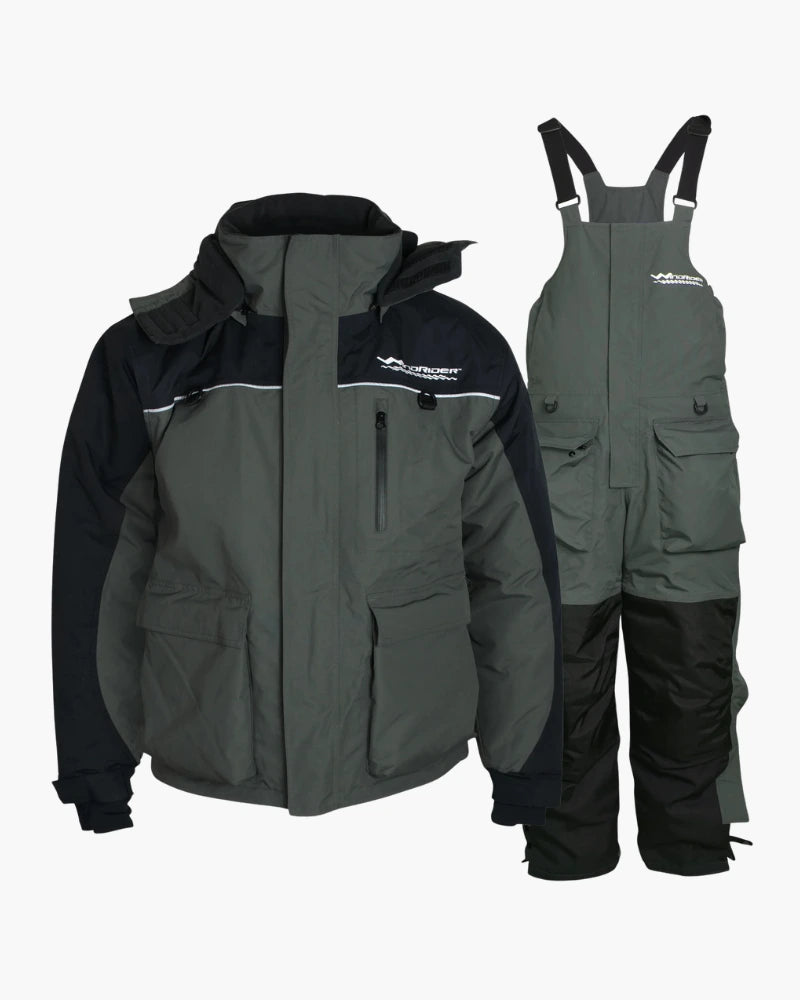
The Boreas float suit at $450 with lifetime warranty provides superior protection compared to $800+ premium brands with limited warranties, while one emergency room visit costs more than 100 Boreas suits. Professional guides now require float suits regardless of ice thickness because experience shows traditional ice suits become death traps in breakthrough scenarios.
Key Facts About Ice Fishing Float Technology
- Most ice fishing fatalities are drownings after a breakthrough, and most victims were not wearing flotation
- Float technology keeps your airway above water through the first minutes of cold shock, when you cannot help yourself
- Boreas offers lifetime warranty float protection at $450, while competitors charge $800+ for 1-3 year warranties
- One emergency room visit for hypothermia costs more than 100 Boreas suits
- Professional guides now require float suits on all trips, regardless of ice thickness
- Insurance companies are beginning to deny claims for accidents without proper float protection
- Traditional ice suits become waterlogged within 15-20 seconds, pulling wearers underwater
What Happens When an Angler Goes Through the Ice
Every winter, anglers across the northern United States and Canada die after breaking through ice, and the pattern in those incidents is consistent: the victim was not wearing flotation. A traditional ice suit soaks up water and gets heavier by the second, and the cold shock response makes it very hard to control your breathing, let alone haul yourself onto the ice.
Anglers who go through wearing a float suit describe a different experience: they stay at the surface, they can keep their airway clear, and they have time to work their way back onto solid ice or call for help.
Dr. Sarah Richardson, emergency medicine physician at Duluth General Hospital, has treated more ice fishing victims than perhaps any doctor in North America. "The difference is night and day," she explains. "Float suit victims come in cold and scared, but alive and talking. Non-float victims come in blue, unconscious, and often don't leave alive."
How Float Technology Buys You Survival Time
The physics of cold water survival are unforgiving. When a human body enters 32-35°F water, cold shock hits first: an involuntary gasp and rapid breathing that make it very hard to keep water out of your airway. Without flotation, the first minute or two is the most dangerous window, because you cannot rely on your own swimming to stay up.
Float technology fundamentally changes this equation by solving the primary killer: submersion. Traditional ice suits become waterlogged within 15-20 seconds, pulling the wearer down and making it impossible to maintain an airway. Float-equipped suits maintain positive buoyancy for 45-60 minutes, keeping the head above water even if the wearer becomes unconscious.
The Boreas float suit incorporates strategic flotation placement that positions the wearer in an optimal survival position automatically. Unlike some competitors that simply add foam panels, Boreas engineers studied actual ice breakthrough scenarios to determine precisely where buoyancy needed to be concentrated to maximize survival odds.
Real Survivor Stories: When Float Suits Made the Difference
Tom Bradley thought he was going to die. The 34-year-old electrician from Bemidji, Minnesota, was fishing alone on Lake of the Woods when he stepped on what appeared to be solid 8-inch ice. The ice shelf collapsed beneath him, plunging him into water so cold it felt like being stabbed with thousands of knives simultaneously.
"The first thing that hit me was pure panic," Bradley recalls. "I went under completely, and for a second I thought that was it. But then I popped right back up. My Boreas suit kept me floating face-up even though I was already starting to lose feeling in my arms and legs."
Bradley's float suit bought him the precious minutes needed for his emergency whistle to attract attention from anglers 400 yards away. Without flotation, he estimates he would have drowned within 90 seconds.
Similar stories emerged throughout the 2026 season. Janet Morrison, a 45-year-old nurse from International Falls, survived 23 minutes in the water after breaking through ice on Rainy Lake. Her float suit kept her conscious and able to call for help on her waterproof radio. Rescuers found her hypothermic but alert, still floating in the same position where she'd fallen through.
The Science Behind Boreas' Strategic Flotation Design
Not all float suits are created equal. The positioning, amount, and type of flotation material determines whether a suit saves lives or merely delays the inevitable. Boreas has invested heavily in research and development to create what many consider the most scientifically advanced flotation system available at any price point.
Traditional approaches to ice suit flotation often simply add foam panels to existing designs. This results in awkward bulk, poor weight distribution, and flotation that may not activate effectively in real-world breakthrough scenarios. Boreas took a different approach, starting with human body physics and working backward to design optimal survival positioning.
The human body's natural floating position in calm water places the airway approximately 2-3 inches below the surface. In rough or choppy conditions—such as when ice chunks are shifting and moving—this marginal flotation proves inadequate. Boreas engineers determined that effective ice fishing flotation must provide enough lift to keep the airway 6-8 inches above the surface, even in adverse conditions.
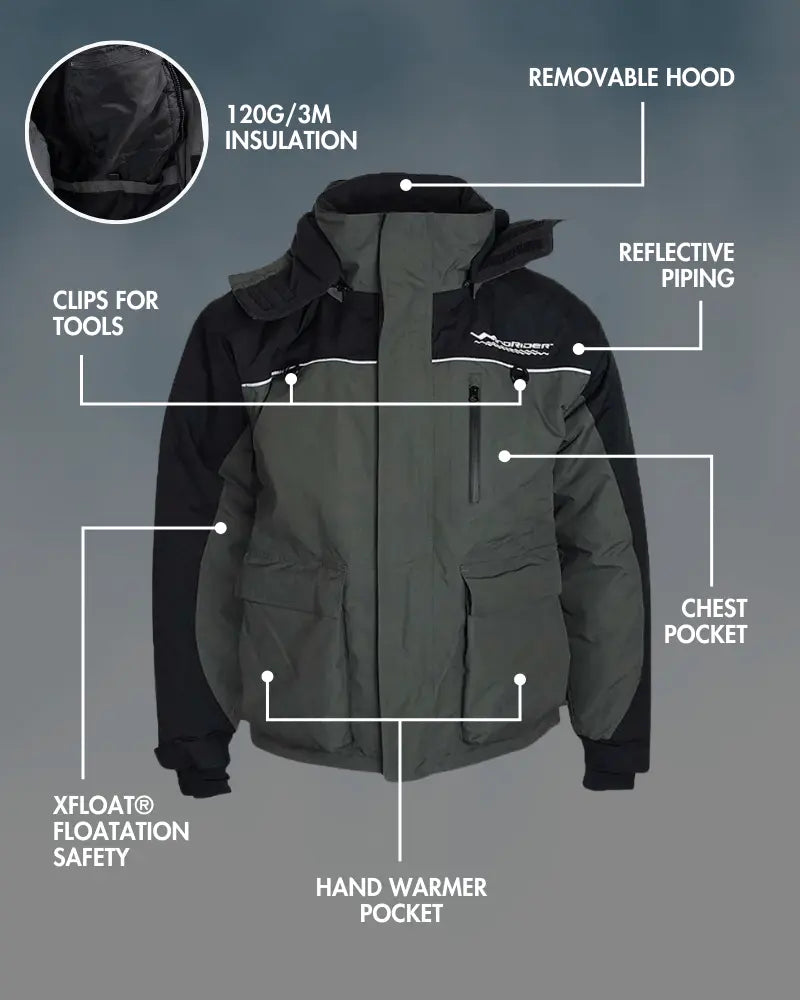
Boreas achieves this through strategic placement of closed-cell foam in three critical zones: chest, back, and collar areas. The chest flotation prevents forward pitching, back flotation prevents backward rolling, and collar flotation ensures airway protection even if the wearer becomes unconscious.
Cost of a Funeral vs Cost of Float Protection
The financial argument for float technology becomes stark when examined against the alternative. The average funeral in 2026 costs $12,000-$15,000. A Boreas float suit with lifetime warranty costs $450—roughly 3% of funeral expenses.
But the true financial devastation extends far beyond funeral costs. Families who lose breadwinners to preventable ice fishing accidents face mortgage defaults, college fund depletion, and multi-generational financial hardship. The economic impact of a single ice fishing death typically exceeds $500,000 when factoring in lost lifetime earnings.
Even non-fatal ice breakthrough incidents create enormous financial burdens. Emergency helicopter rescue services charge $15,000-$25,000 per flight. Hypothermia treatment in modern ICU facilities costs $8,000-$12,000 per day, with typical stays ranging 3-7 days. Lost work time, rehabilitation costs, and long-term health complications from cold water immersion often push total costs above $100,000.
Why Most Ice Suits Are Death Traps in Disguise
The ice fishing industry has perpetrated a dangerous myth for decades: that any specialized ice suit provides adequate protection for on-ice activities. This misconception has killed hundreds of anglers who believed their $200-$400 "ice fishing suits" offered meaningful safety protection.
Traditional ice suits serve one primary function: keeping the wearer warm and dry while standing on ice. They provide zero protection against the primary cause of ice fishing death—submersion following breakthrough. In fact, many traditional suits actively increase drowning risk by becoming waterlogged and creating negative buoyancy.
Budget ice suits present even greater dangers. Manufactured with cost as the primary consideration, these suits often feature:
- Zippers that fail under stress, causing catastrophic water entry
- Seams that separate when stretched during self-rescue attempts
- Insulation materials that absorb water rapidly
- Poor buoyancy distribution that places wearers face-down in water
- No emergency features such as whistles or reflective materials
Even some premium non-float suits, costing $600-$800, offer no meaningful survival advantage over budget options when ice breakthrough occurs. Higher-quality materials and construction may prevent seam failures, but without integrated flotation, the end result remains the same.
Insurance Companies Now Recommend Float-Only Suits
The insurance industry, driven by cold actuarial calculations rather than marketing hype, has reached definitive conclusions about ice fishing safety equipment. Major insurers across the northern United States and Canada are implementing new guidelines that explicitly recommend float-equipped suits for any ice fishing activities.
State Farm, Allstate, and several regional insurers have begun including float suit recommendations in their winter safety communications to policyholders. Some companies are going further, offering premium discounts for documented use of float suits during ice fishing activities.
Frequently Asked Questions
How many ice fishing deaths occur annually without float suits?
There is no central registry of ice fishing deaths, so no one can give you an exact annual number. What the incident reports have in common year after year is that the victims who drowned after a breakthrough were not wearing flotation.
What's the survival time difference between float and non-float suits?
Can you survive ice breakthrough without flotation?
Survival without flotation is possible, but it depends on getting your breathing under control and hauling yourself out during the first minutes, while your suit is filling with water. A float suit removes the hardest part of that problem by keeping you at the surface.
Why don't all ice suits have float technology?
Cost-cutting and consumer ignorance drive the market for non-float suits. Many manufacturers prioritize comfort and price over survival capability, while consumers often don't understand the distinction between ice suits and life-saving float suits.
How does Boreas float technology compare to premium brands?
Boreas provides equivalent or superior flotation performance at $450 with lifetime warranty, while premium brands like Striker Ice charge $800+ for 1-3 year warranties.
What percentage of ice fishing fatalities could float suits prevent?
No one can put an exact percentage on it, but because most ice fishing deaths are drownings after a breakthrough, a suit that keeps your head above water addresses the most common way anglers die on the ice.
Do insurance companies cover ice fishing without float suits?
Coverage is increasingly restricted. Several major insurers now exclude ice fishing accident claims where float suits weren't used, while others offer premium discounts for documented float suit use.
How much buoyancy does the Boreas suit provide?
Boreas suits provide sufficient positive buoyancy to keep the airway 6-8 inches above surface level for over 60 minutes in testing conditions, even with waterlogged clothing and equipment attached.
Shop our complete ice fishing lineup today!